Every night before bed, my dad would recount fantastical tales of his adventures “beyond the horizon.” He reminisced about discovering hidden mangrove islands off the coast, braving chaotic storms on sailboats, and encountering all kinds of wildlife. These stories instilled in me a deep admiration for exploration and reverence for the non-human world. Some of my happiest childhood memories are of beach days where I’d blow up an inflatable raft, call on my brothers to serve as the crew, and embark on voyages to nearby sandbars.
I yearned to encounter a world as boundless as my father’s. But as I grew older, I internalized just how much the landscapes we shared had been transformed by environmental degradation. Just as I felt myself losing hope, I received a gift that would change my life—a camera. Looking through the viewfinder for the first time, I saw the world not for what it was, but for what it could be. I began carrying my camera everywhere, and my work soon became an encapsulation of my interactions with a changing planet.
This early exploration of landscapes through photography laid the foundation for my interest in environmental imagination, a concept I formally began engaging with in 2019. While considering the changing landscapes of my hometown, Miami, Florida, I sought to uncover connections between place, memory, and grief through photography. This project, titled Ecological Grief, initiated my long-standing intrigue in the relationship between the non-human world, historical processes, and identity. At the onset of my graduate studies, I realized that although existing scholarship acknowledges how environmental imaginaries materialize, they are often treated as static, historical byproducts rather than dynamic, transhistorical phenomena. In other words, scholarship frequently relegates the study of these conceptualizations to conclusions rather than making them the focus of inquiry, thereby limiting their ability to address their legacy.
As I delved deeper into environmental imagination, I realized its applications extended beyond my personal experiences in Miami. I began connecting concepts inspired by the works of Lawrence Buell, Paul Sutter, and other scholars to better understand the stories my father and grandmother shared about their lives in Cuba before the exile. Their romantic descriptions of the archipelago’s landscapes included broad white sand beaches, grand Spanish colonial-style buildings, pristine marine ecosystems, and bountiful agricultural lands. While considering how environmental imagination could help me comprehend these stories as byproducts of both science and culture, I recalled how mindful I aimed to be during my first visit to Havana in 2017. While there, I actively felt the mental maps, visualizations, and myths I had learned from my family begin to unravel—not because they were false, but because my physical presence in the city challenged and expanded upon them.
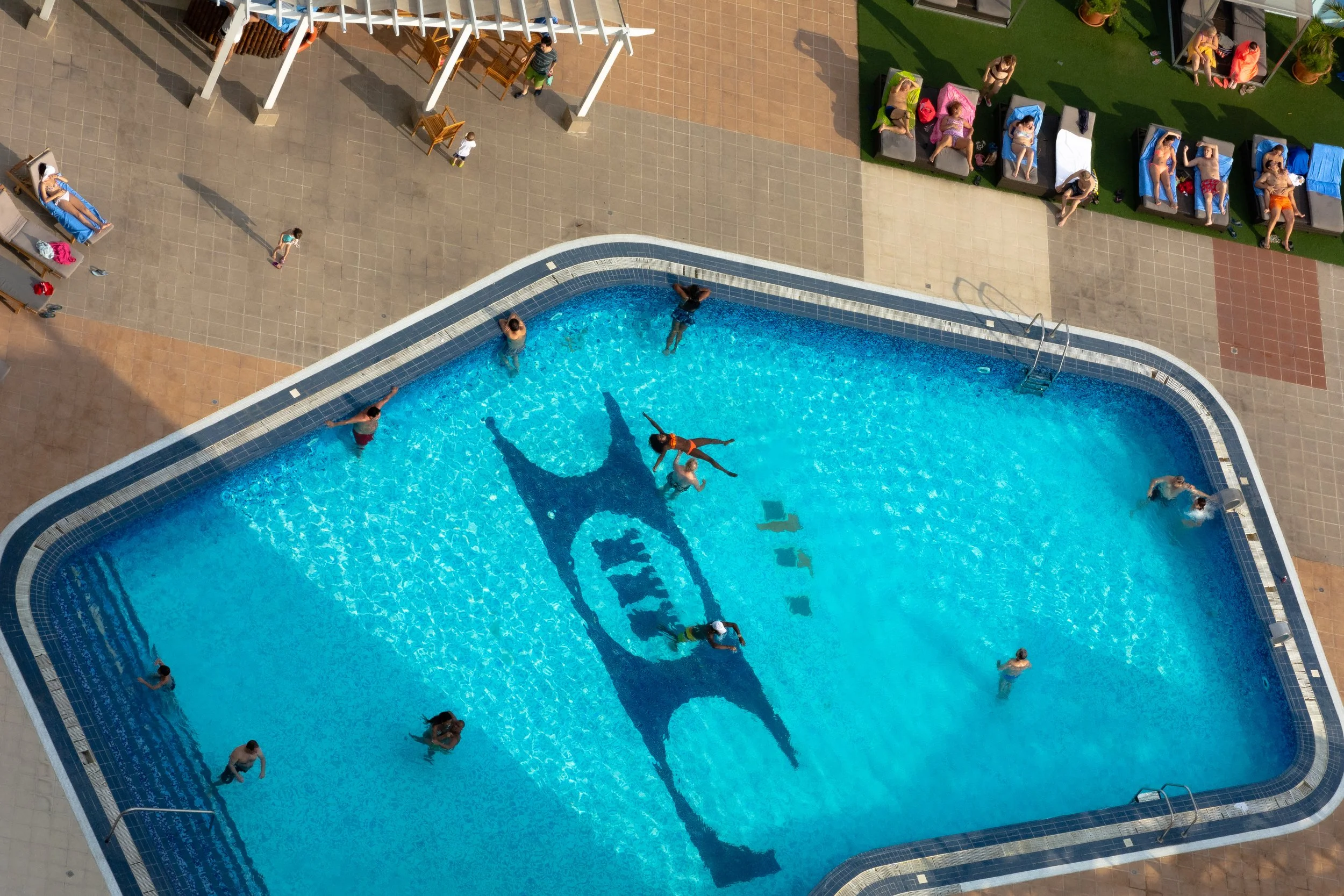
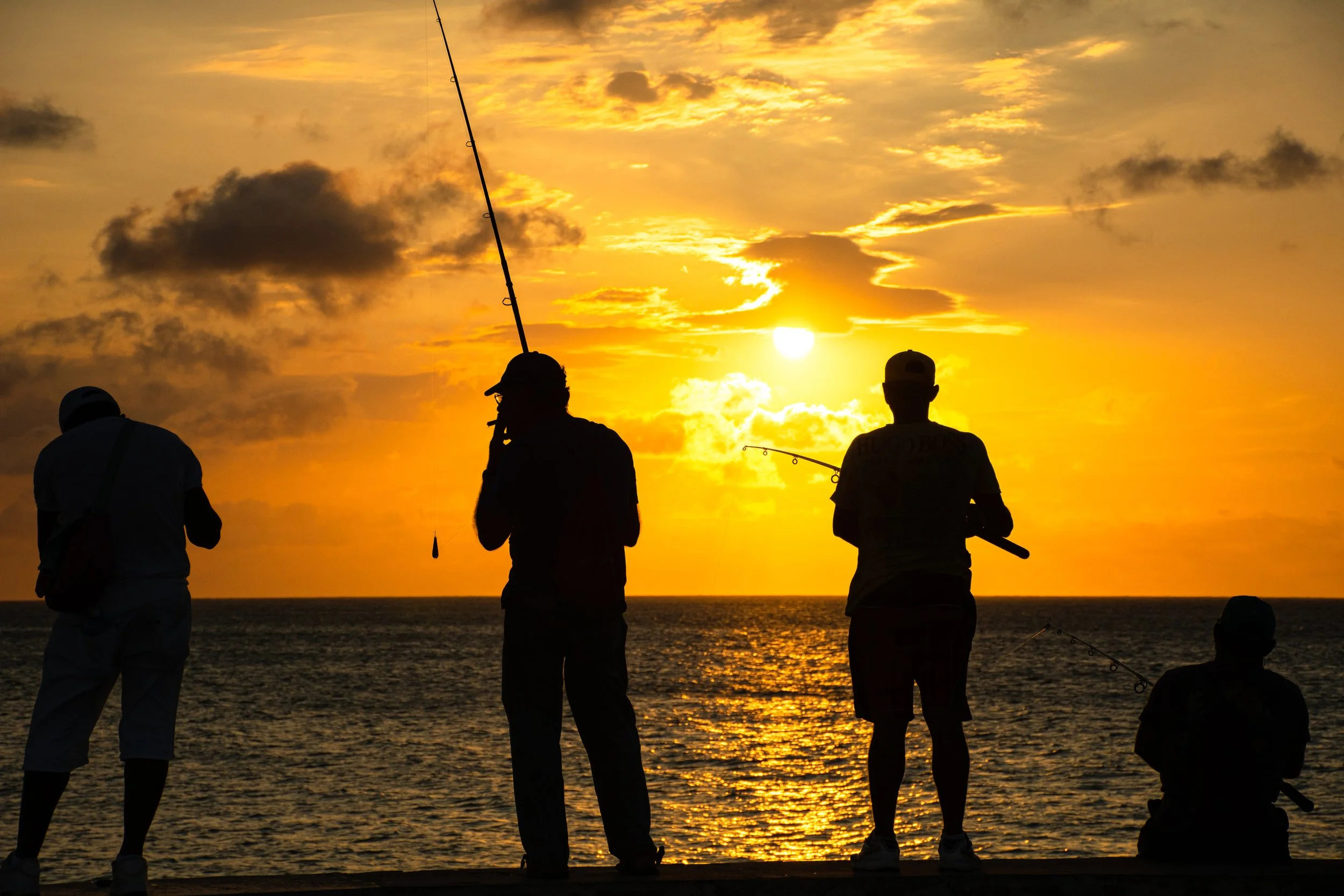
Reflecting on this experience, I began to see how environmental imagination serves as a bridge between personal memory and broader cultural narratives. Eight years since my first visit to Cuba and six years since I began formally engaging with environmental imagination in my photography practice, I wrote about this subject from my home in Miami. While synthesizing my thoughts on the scholarship and cataloging hundreds of images from Cuba to trace the evolution of environmental imagination, I reflected on my own evolution and how it affected my perception of landscapes I had known my entire life.
Miami exemplifies just about every characteristic of the tropical modernity imaginary. Most critically, the city is a manifestation of “conquering nature.” This process is unfolding in real time as the city continues to push its limits against the bounds of the Everglades, approve the construction of new skyscrapers on already climate-vulnerable lands, and enable corporations to dredge the ocean floor. Much like the colonial and imperial powers in Cuba that sought to achieve this ideal through stories and propaganda, Miami’s residents and visitors largely ignore what has been lost to rampant development—destruction of mangroves, acidification of oceans, extermination of reef populations, and clearing of habitats—thanks to the veneer of exotic tropicality.
The parallels between Miami and Cuba became impossible to ignore as I reflected on the ways tropical modernity manifests in both places. The visualizations paired with descriptions of Miami are highly reminiscent of those used to describe Cuba in pre-Revolution times—hot sun, soaring palm trees, and exuberant beach and yacht clubs. Perhaps this manifestation of Miami is a continuation or evolution of the same tropical imaginary that Cubans who exiled to the city continue to view their motherland through. For the first time in my life, I noticed just how abundant these images were and recognized that the throughlines uniting Miami and Cuba extend beyond shared cultural memory and political history, they are deeply embedded into the very land Cuban-Americans occupy today.
As the impacts of accelerating environmental degradation become more pronounced, Miami, Cuba, and the Caribbean are at risk of being transformed once again. Given that environmental imagination has been leveraged as a key mechanism to uphold imperial conquest and capitalist development, my future scholarly contributions and artistic renderings will strive to consider how these conceptualizations might be reimagined to encompass more ecocentric perspectives. Thus, if scholars can push the field of environmental imagination to address the emotional and intellectual impacts of climate change, and if artists can conceptualize the Tropics in ways that transcend the confines of exotic tropicality, this study will remain relevant for decades to come. It may even become a necessary field of inquiry to materialize a future where humans and their environment coexist in greater harmony.
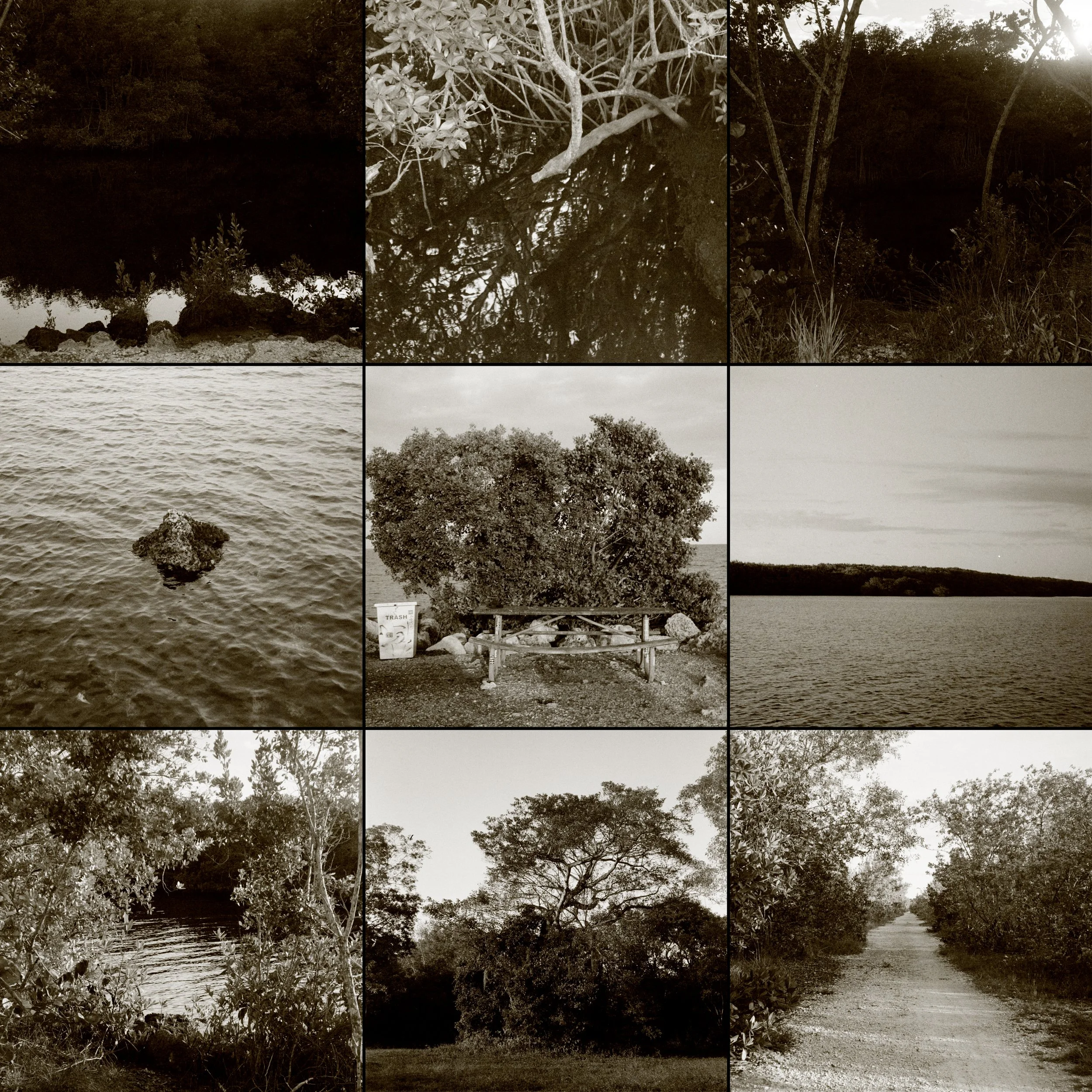
In direct engagement with this work, I began revisiting sites that sparked a sense of awe in my youth, photographing them with a perspective rooted in a new form of tropicality—one attuned to ecocentrism. Through this process of encountering my home with fresh eyes, I made images in two locations that encapsulate my understanding of tropicality: Matheson Hammock Preserve and Virginia Key. For example, I opted to photograph mangroves instead of palm trees, highlighting their critical role as habitats for marine and aviary species and as natural barriers protecting Miami from rising sea levels and natural disasters. I then took these images and composed 3x3 grids inspired by the work of José Manuel Fors.
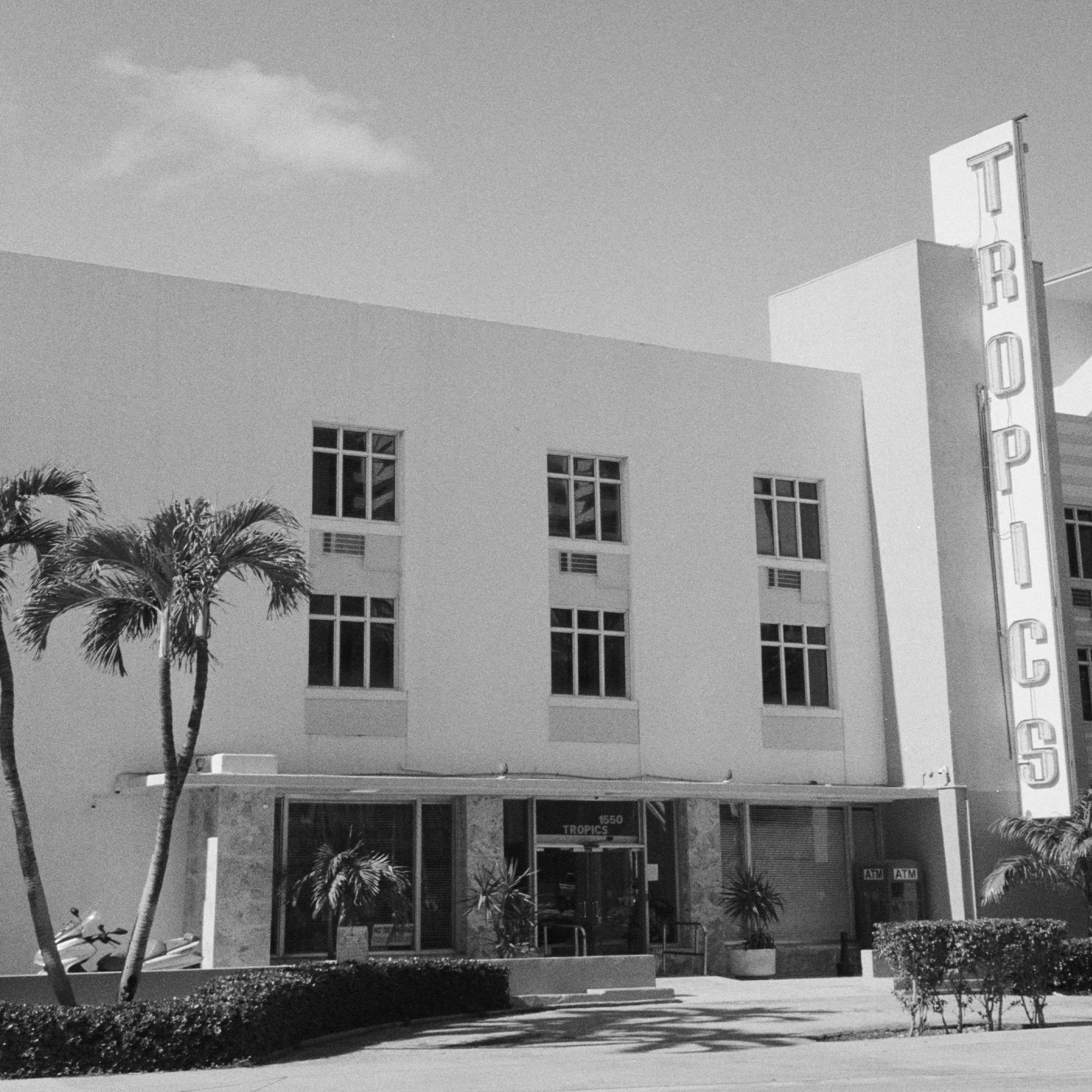
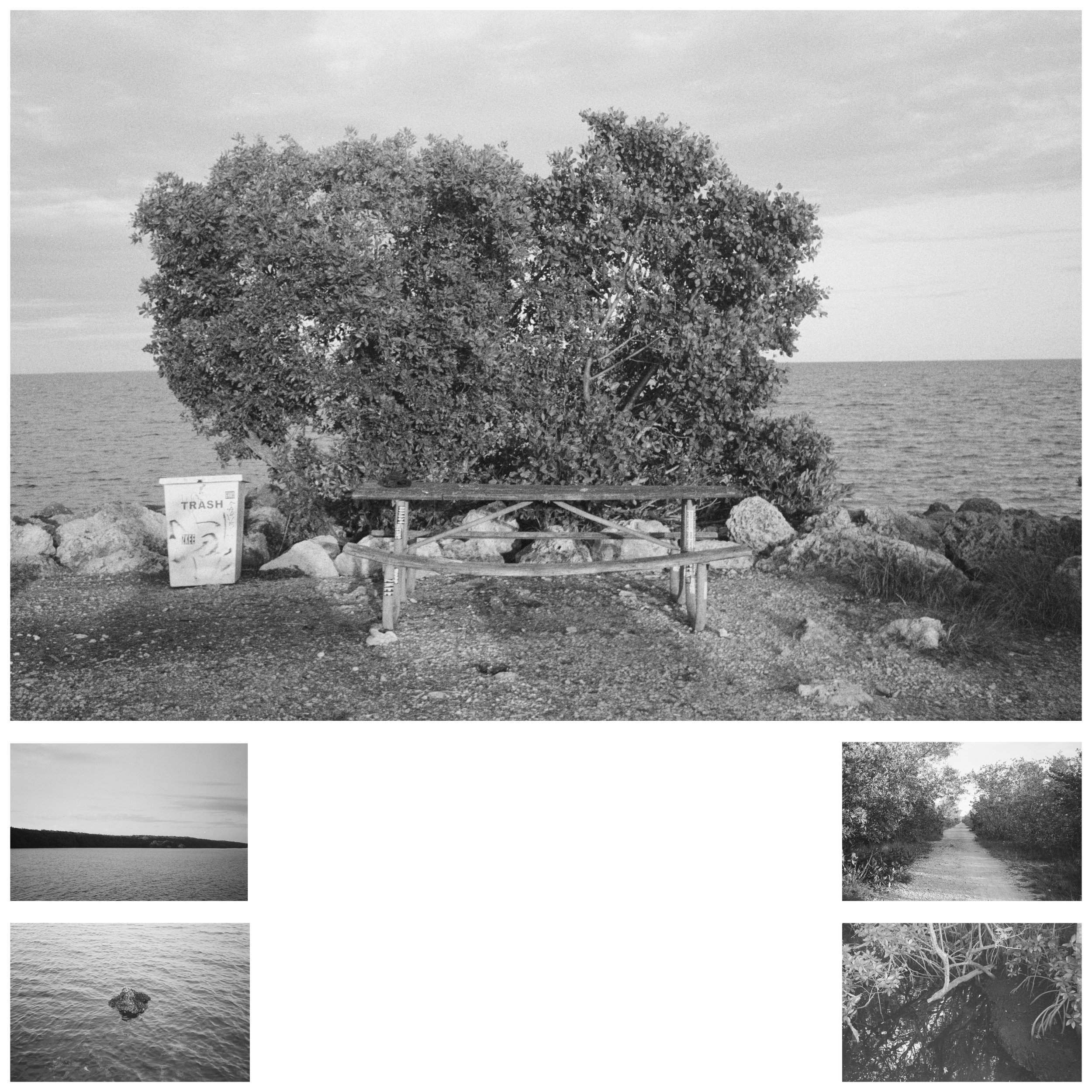
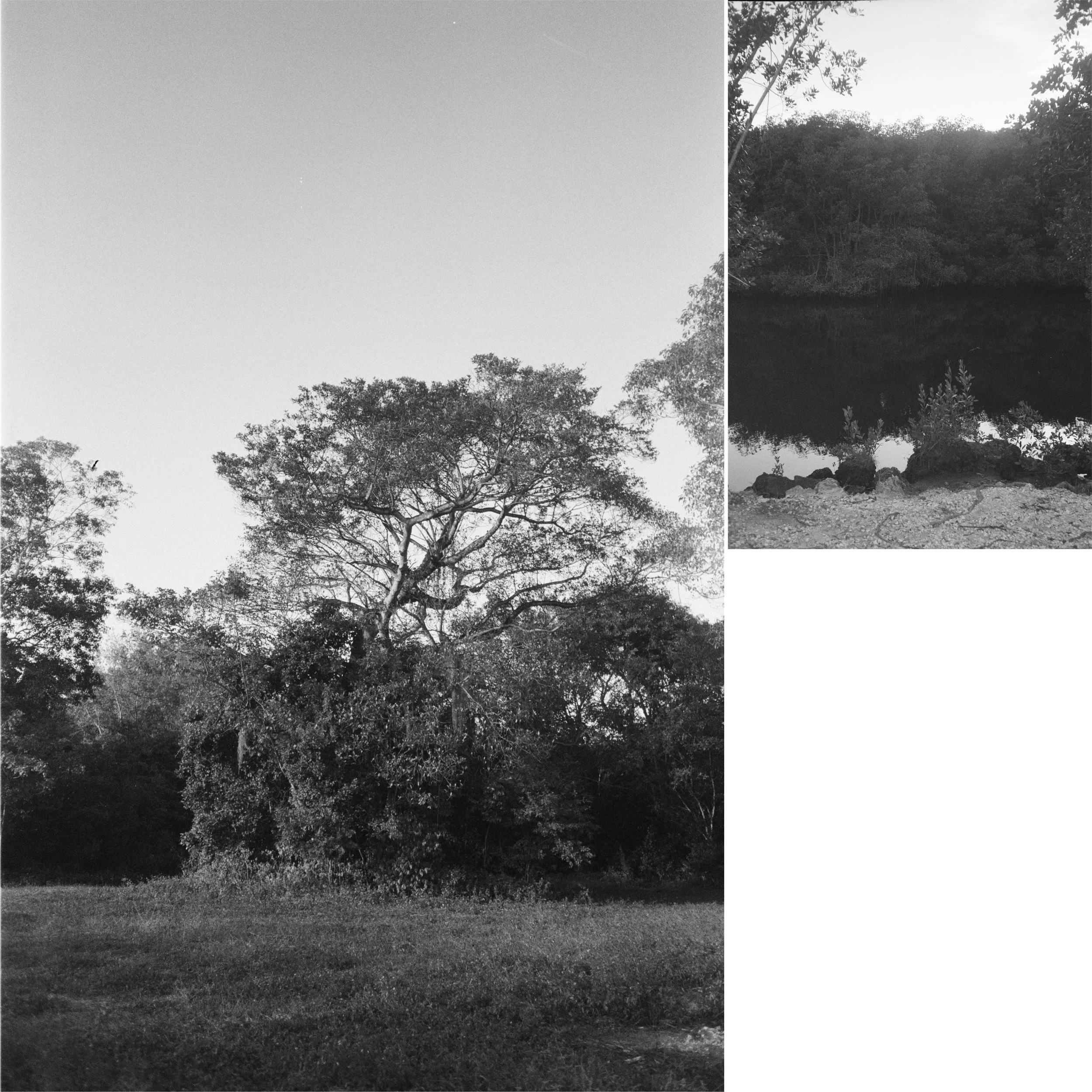
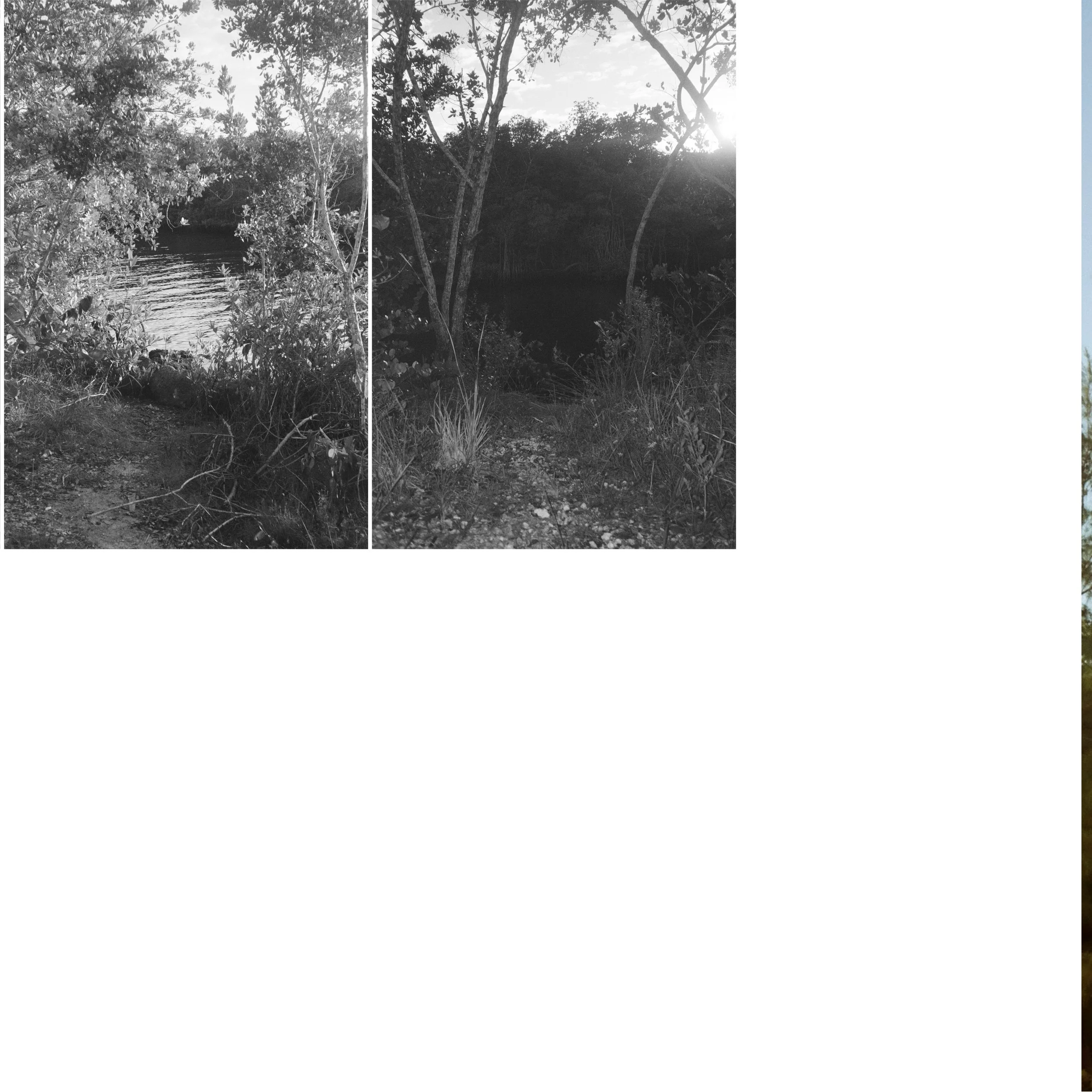
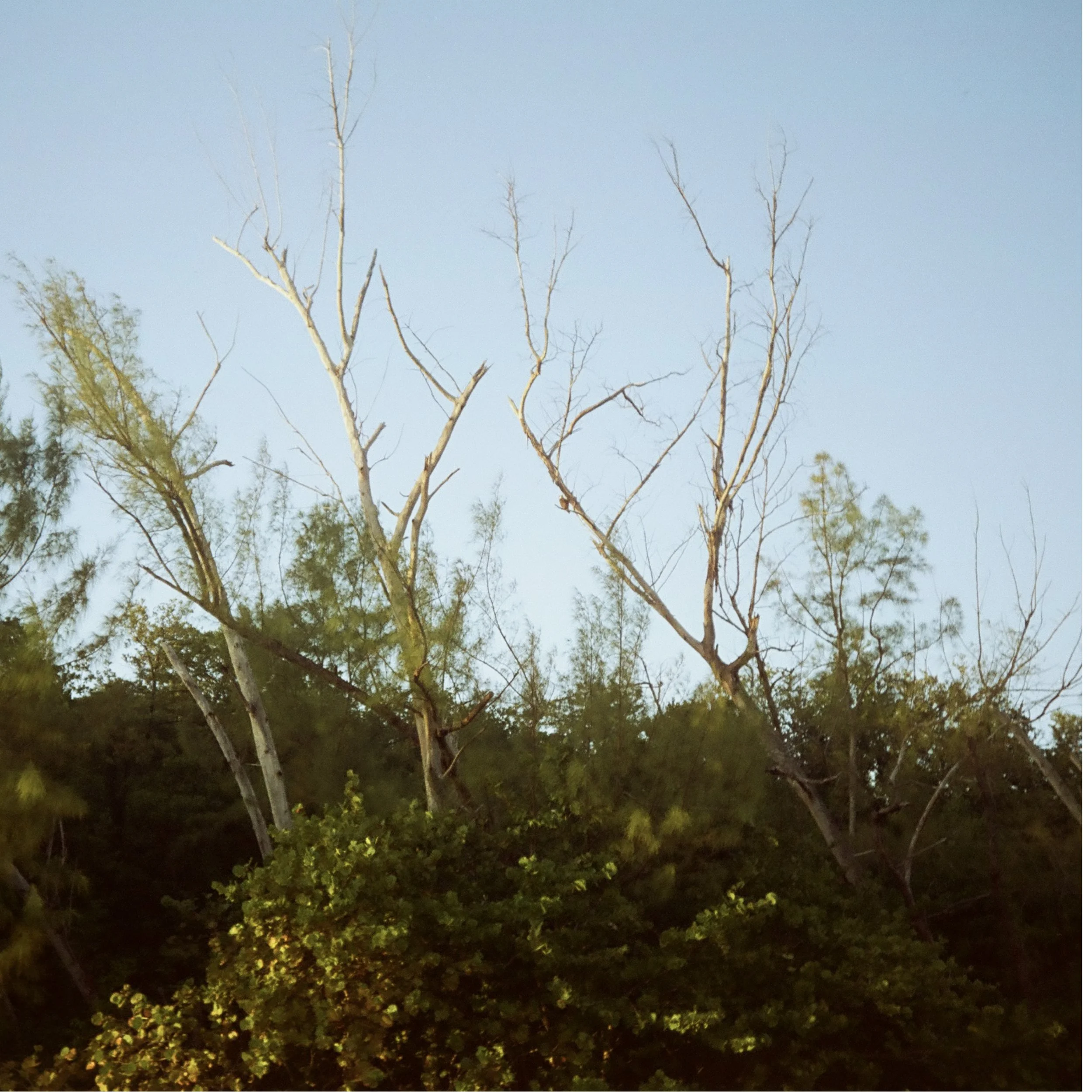
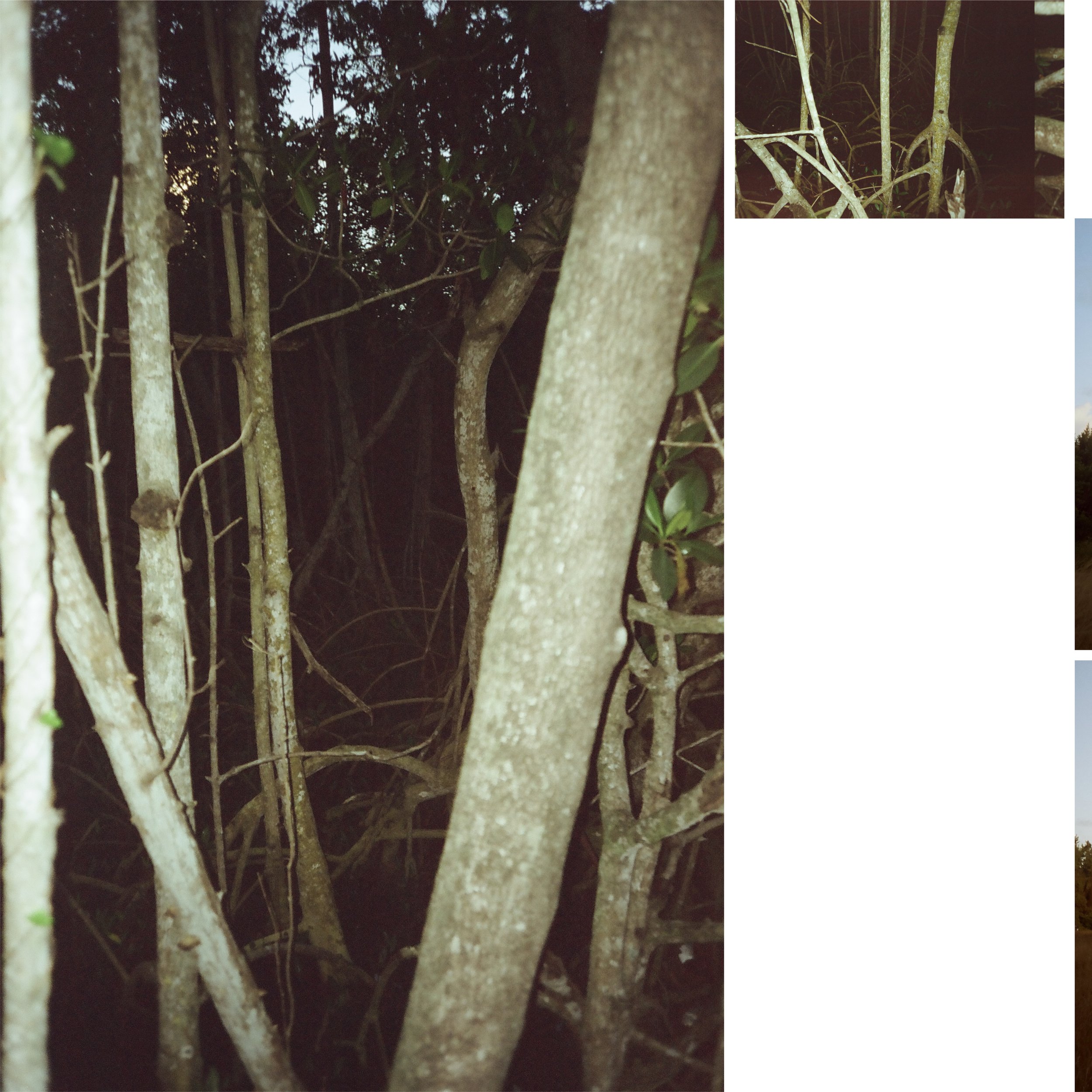
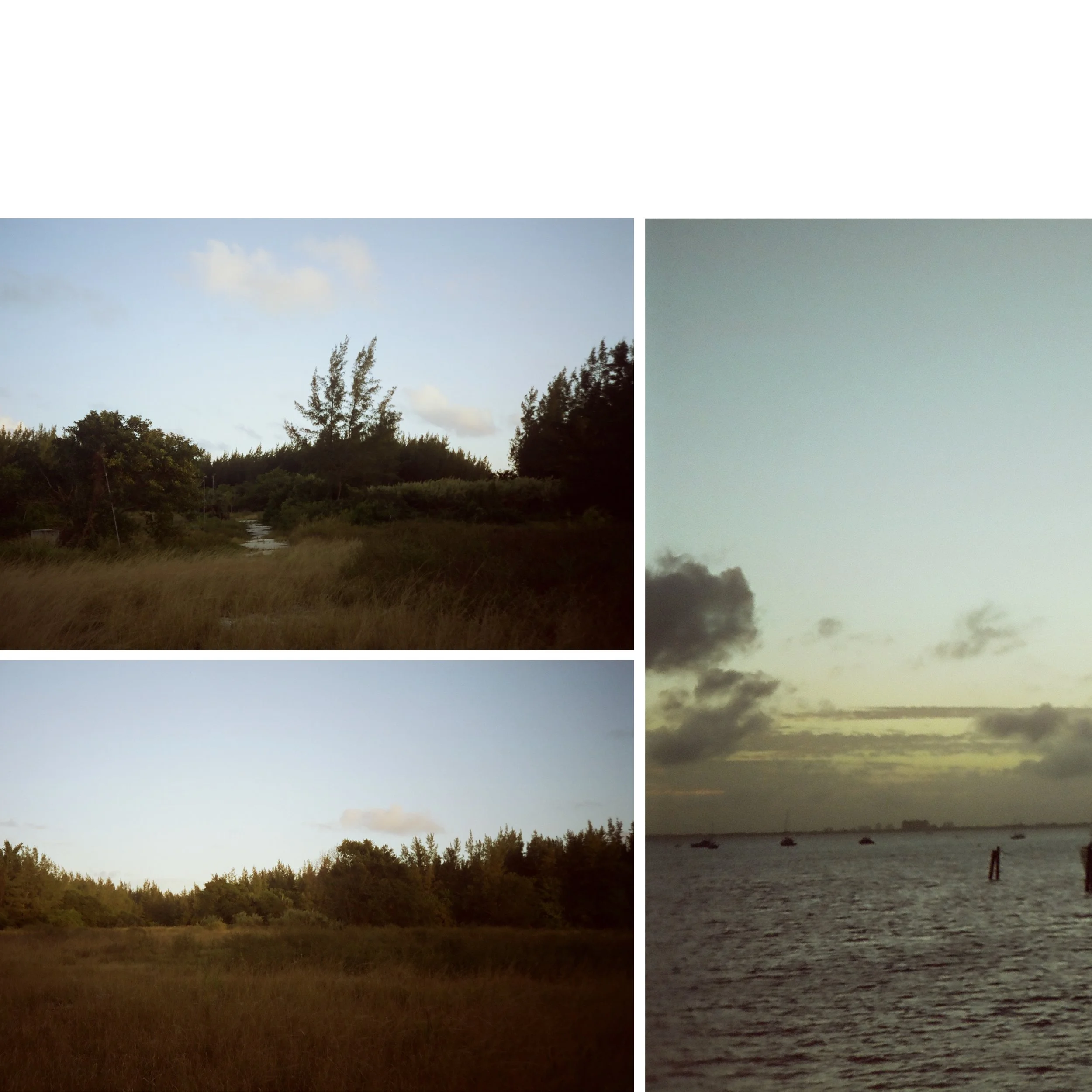
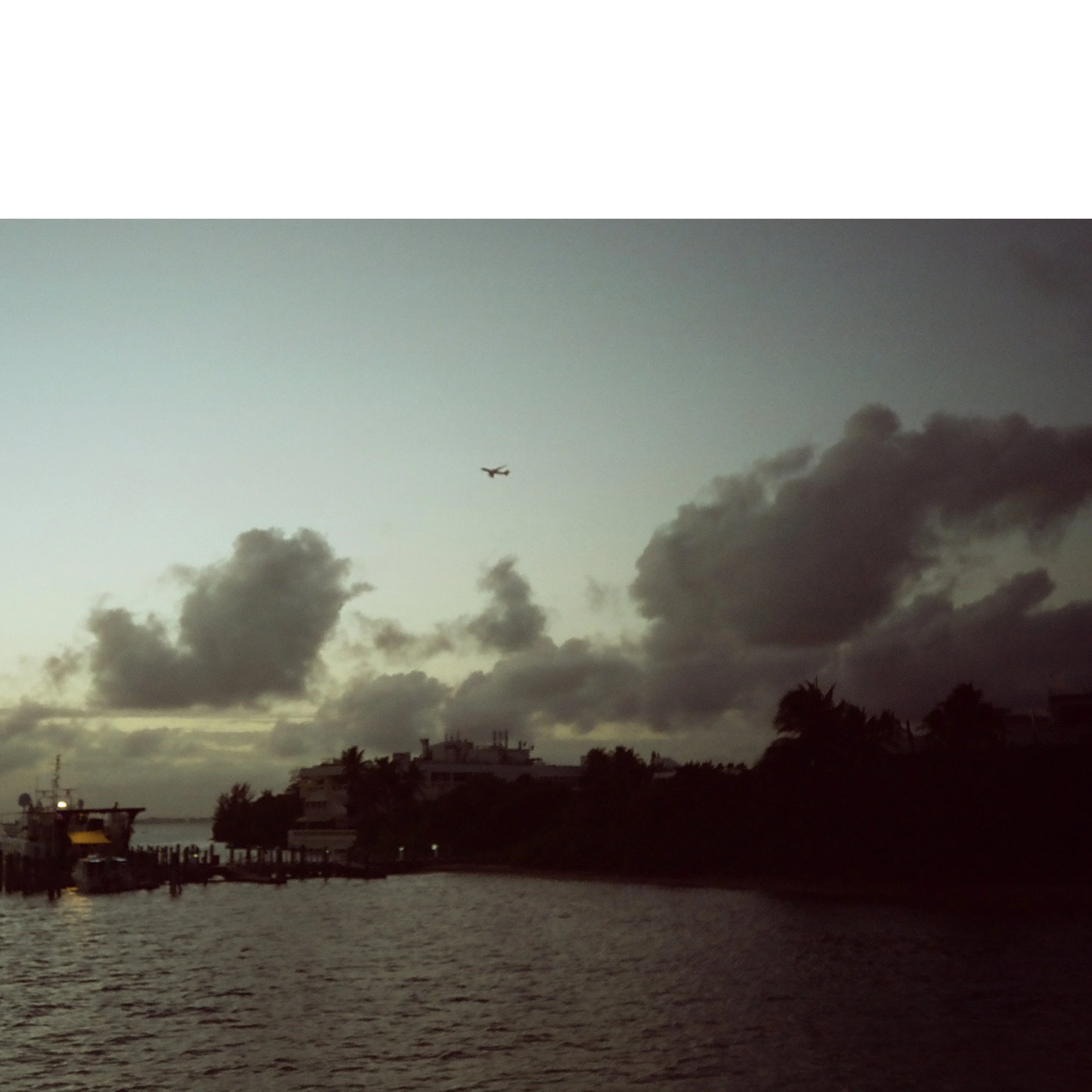
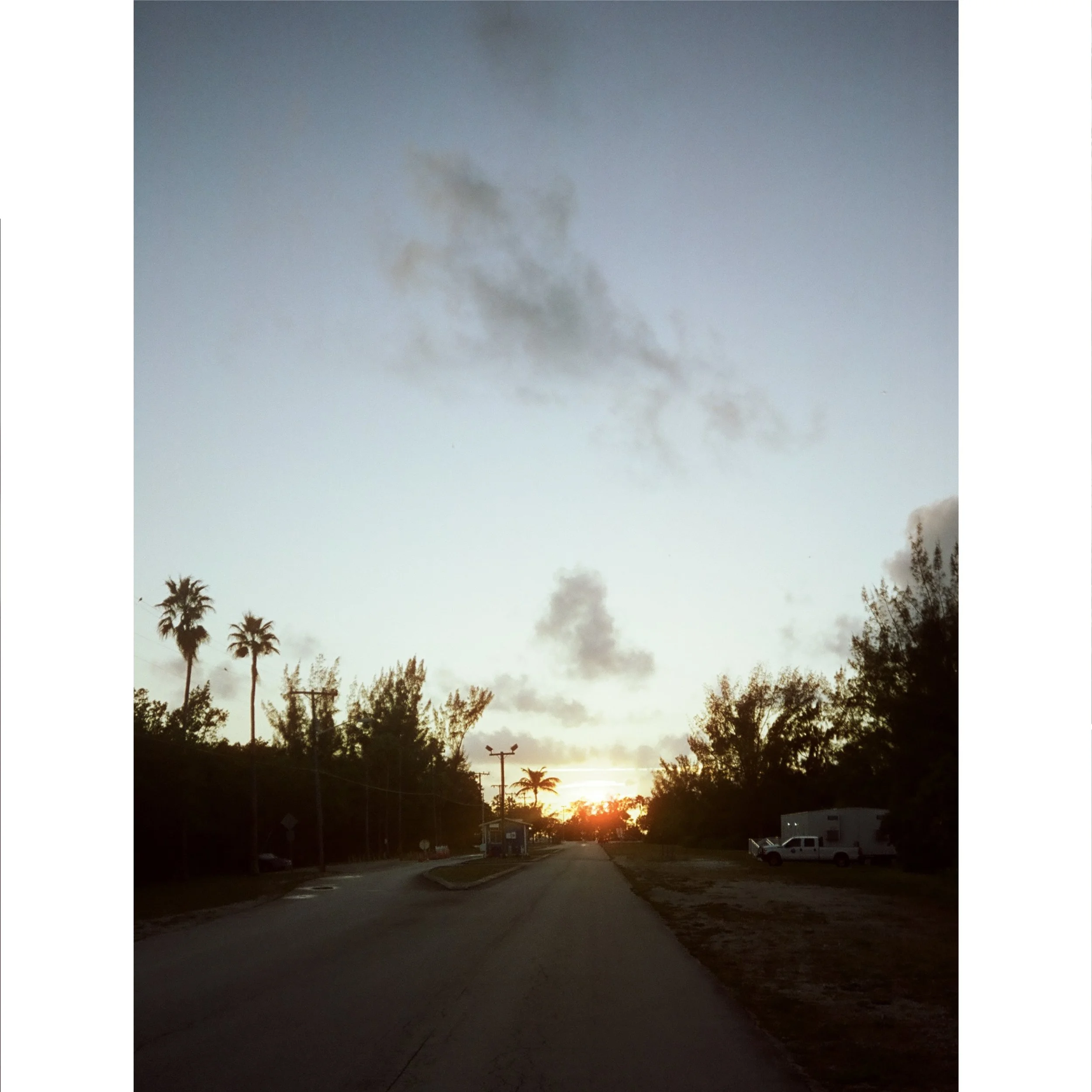
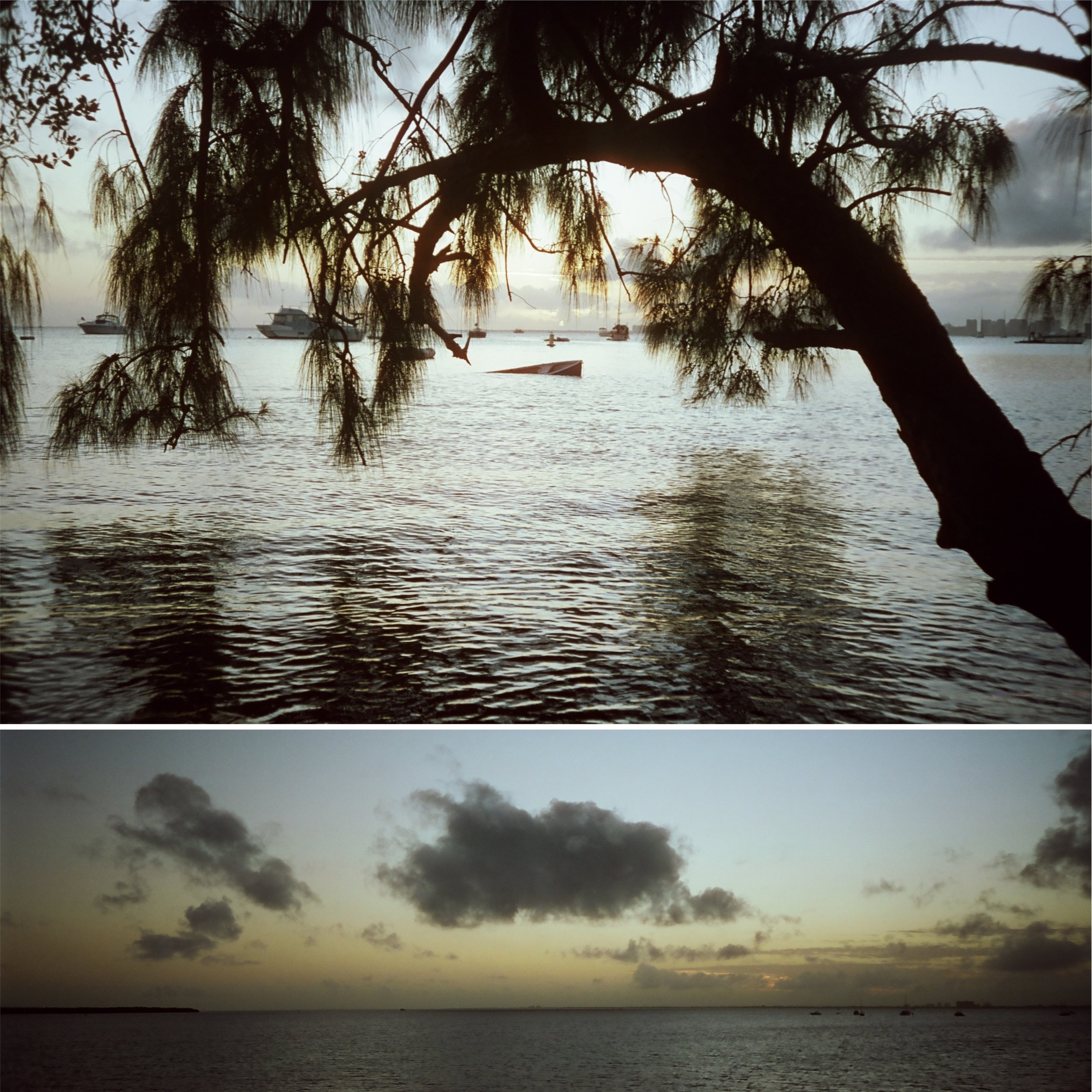
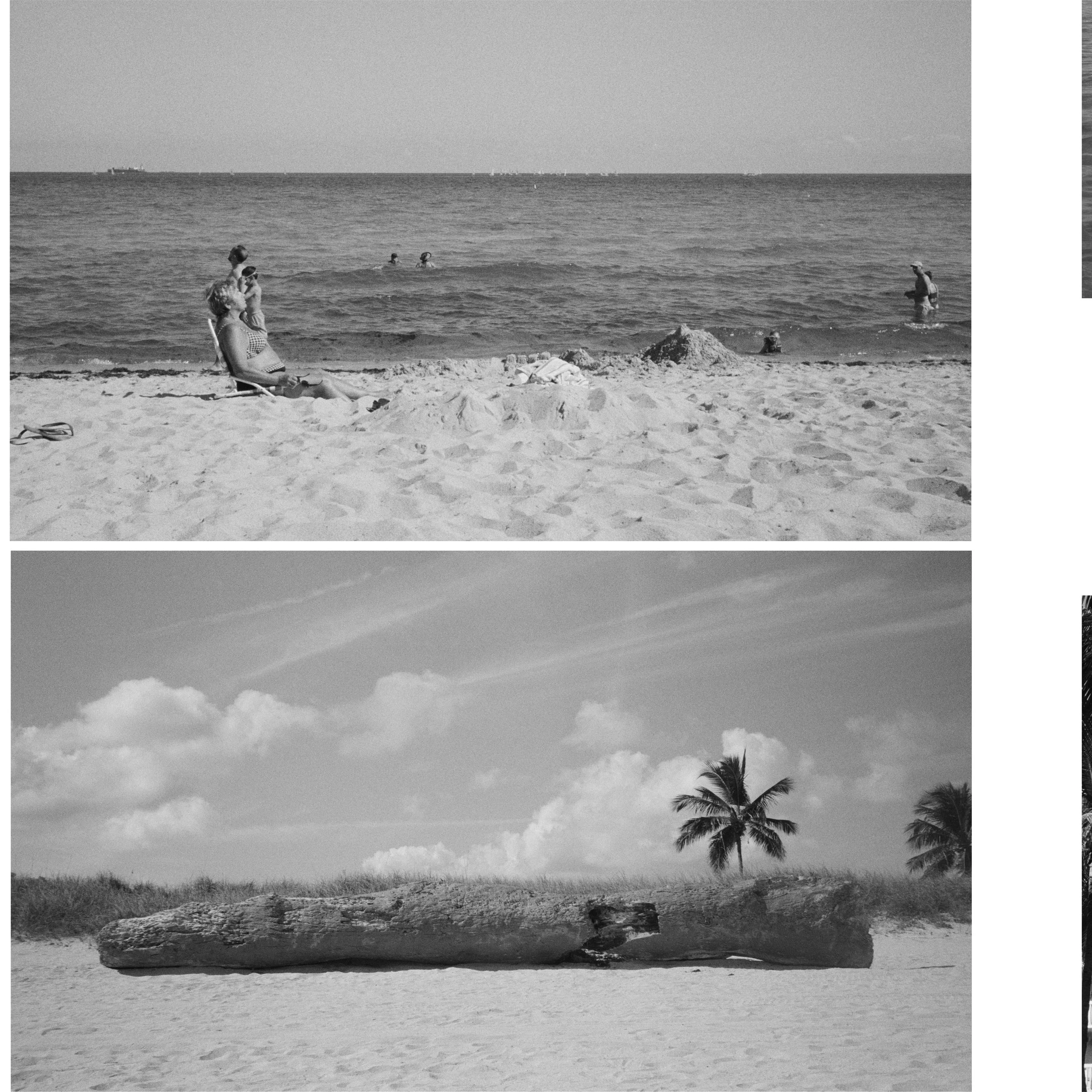
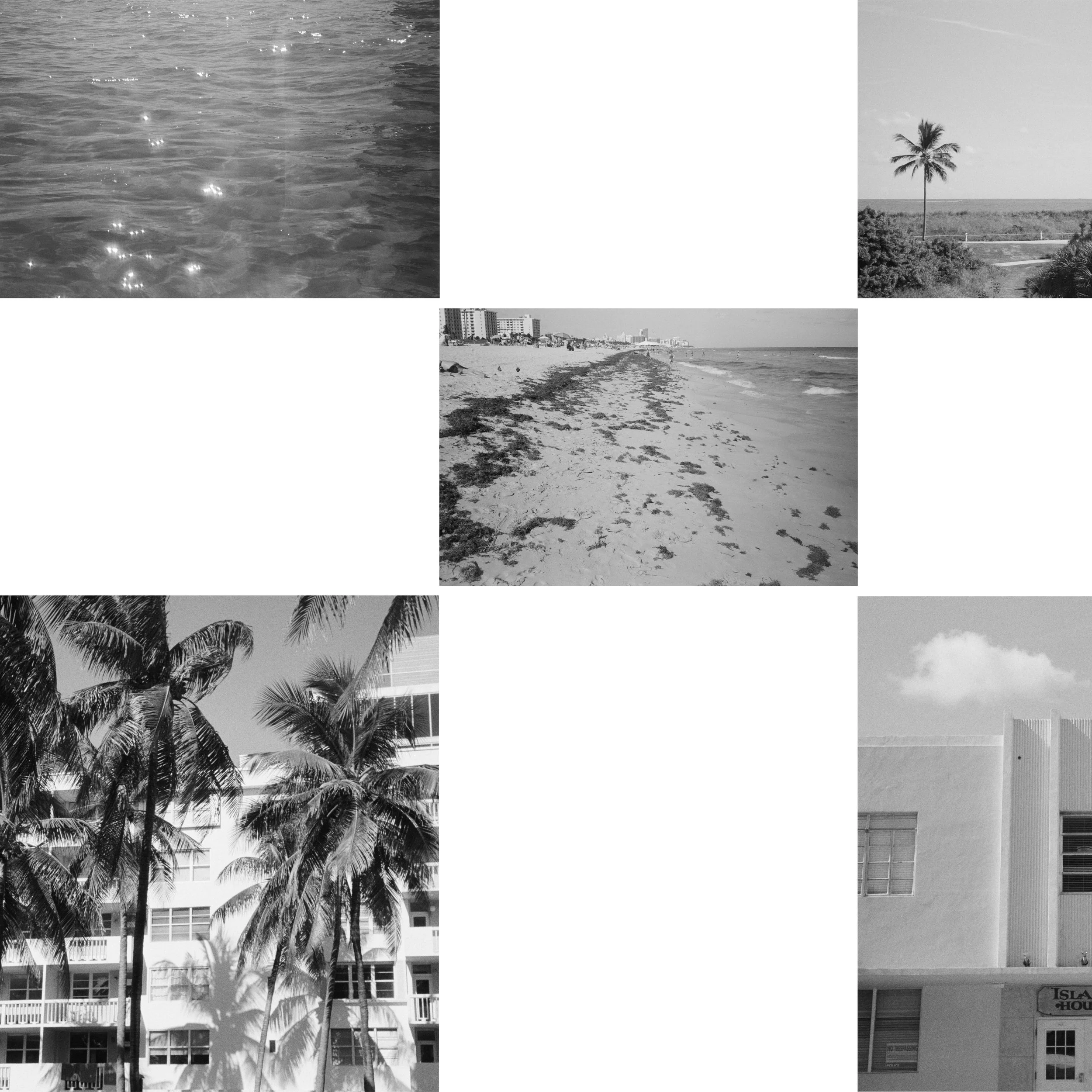
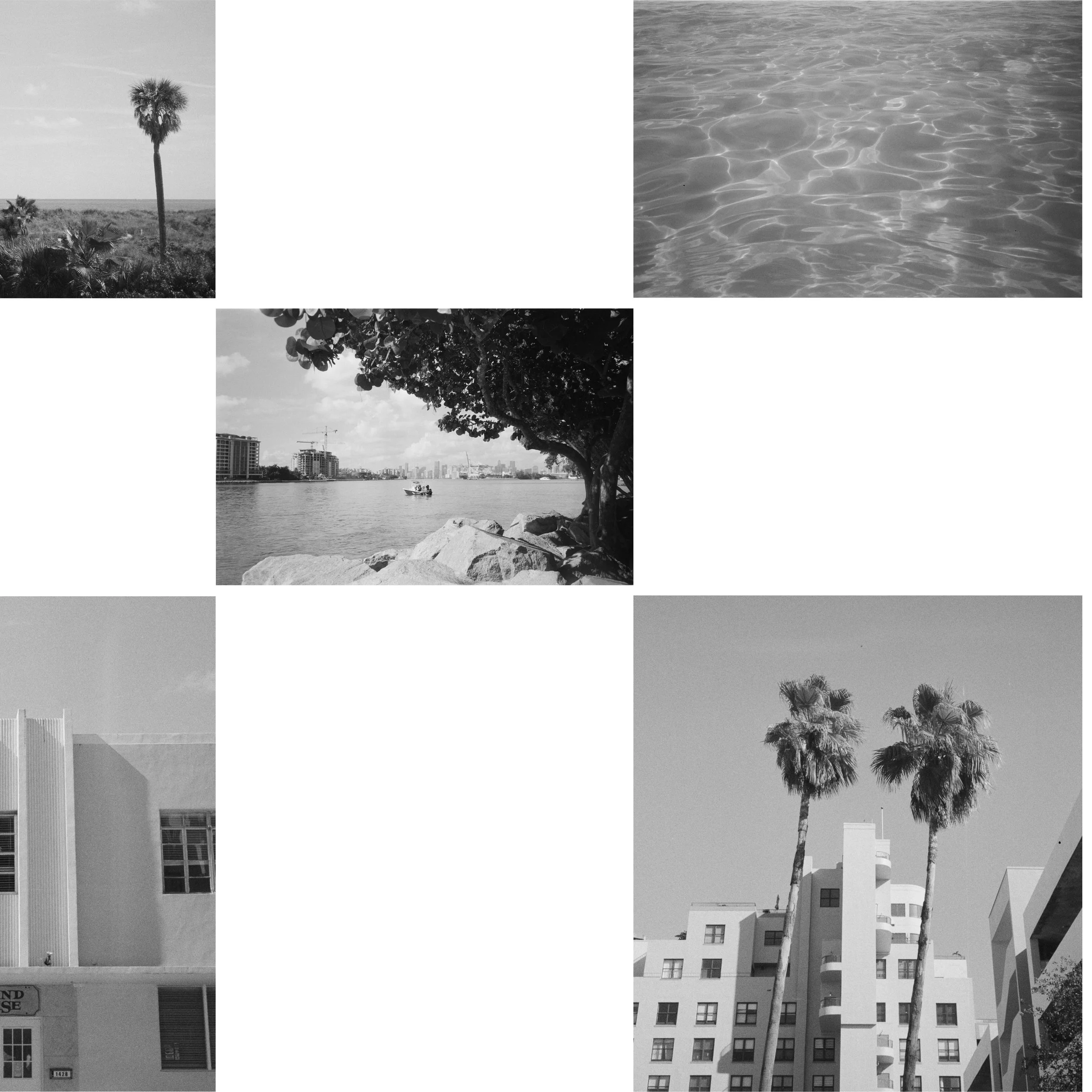
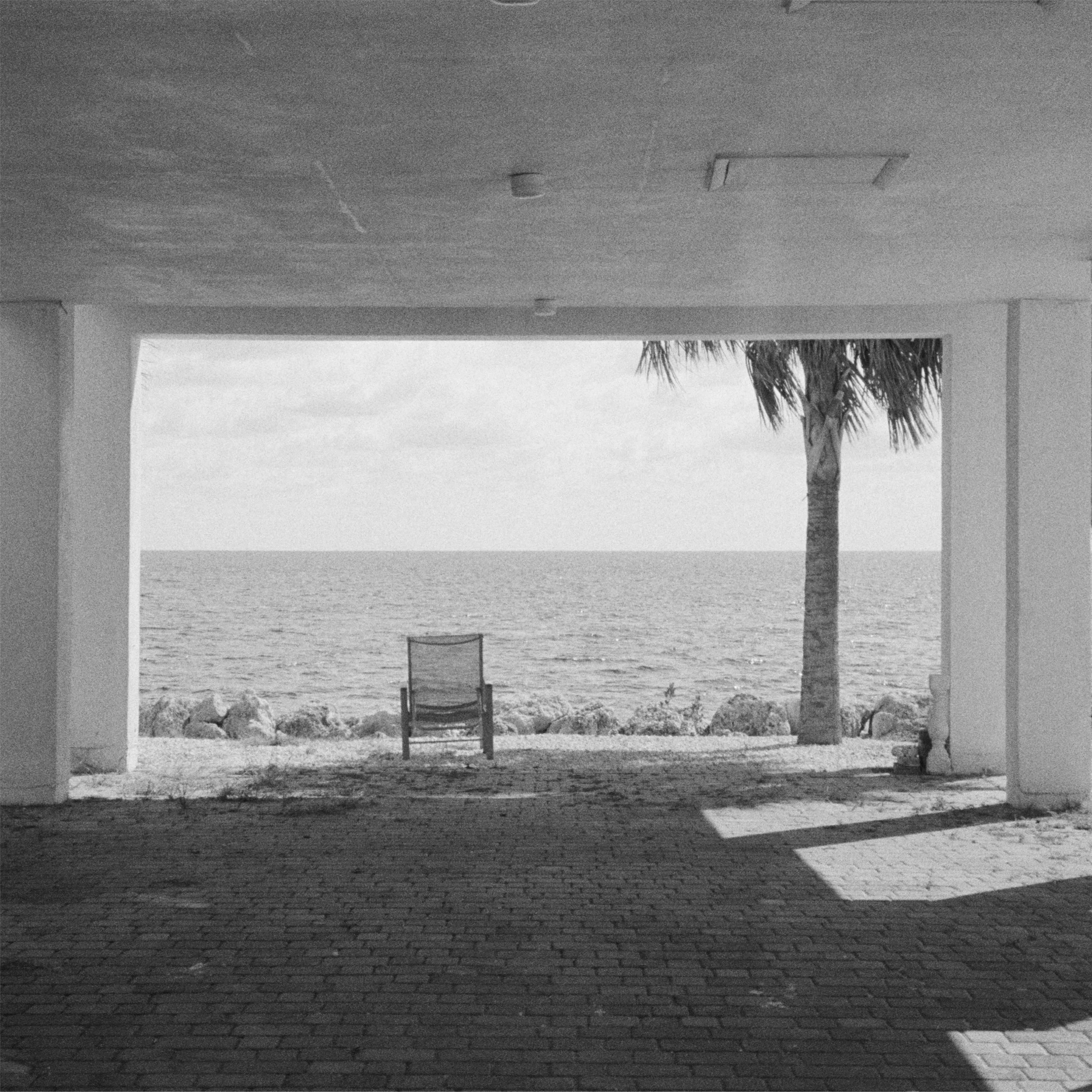

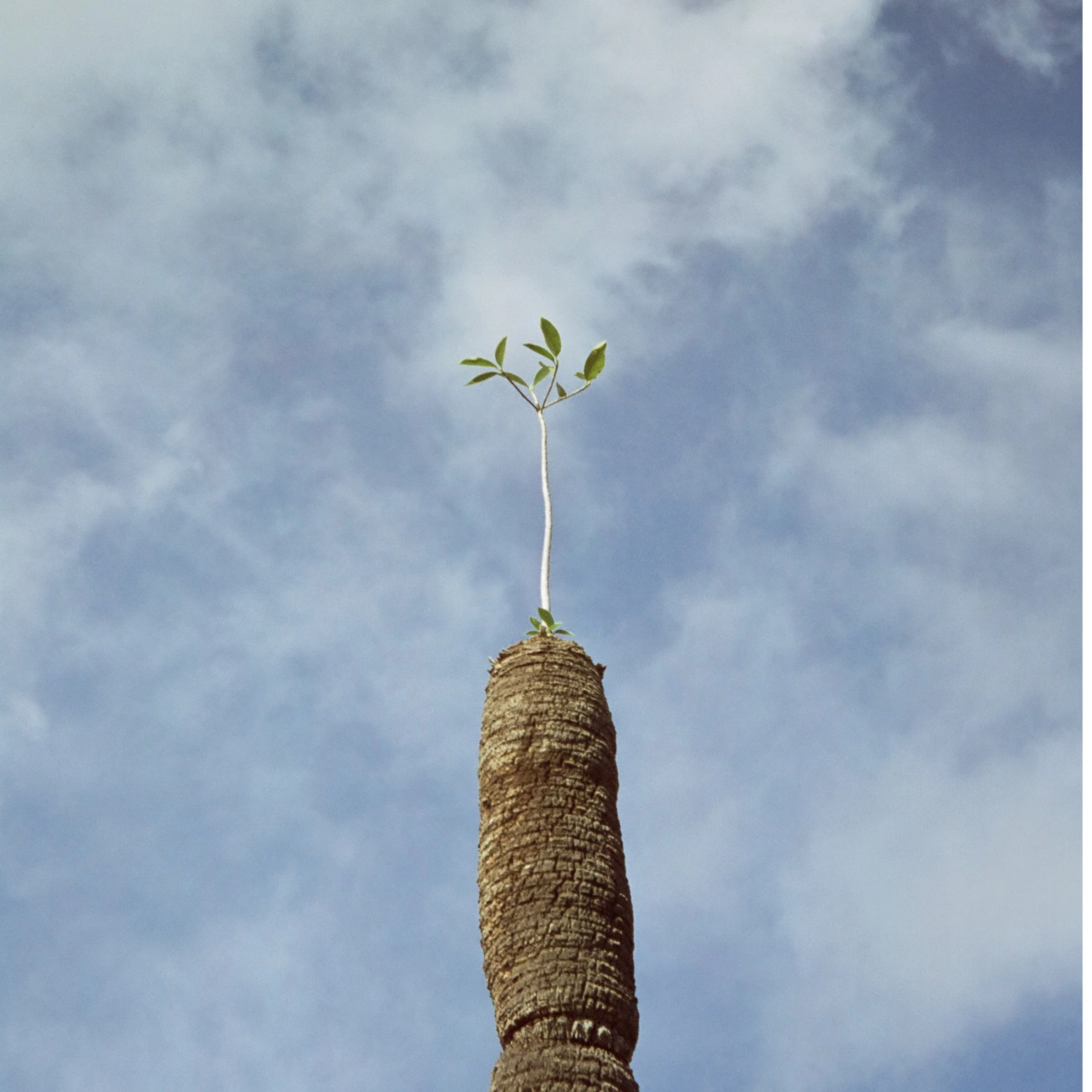
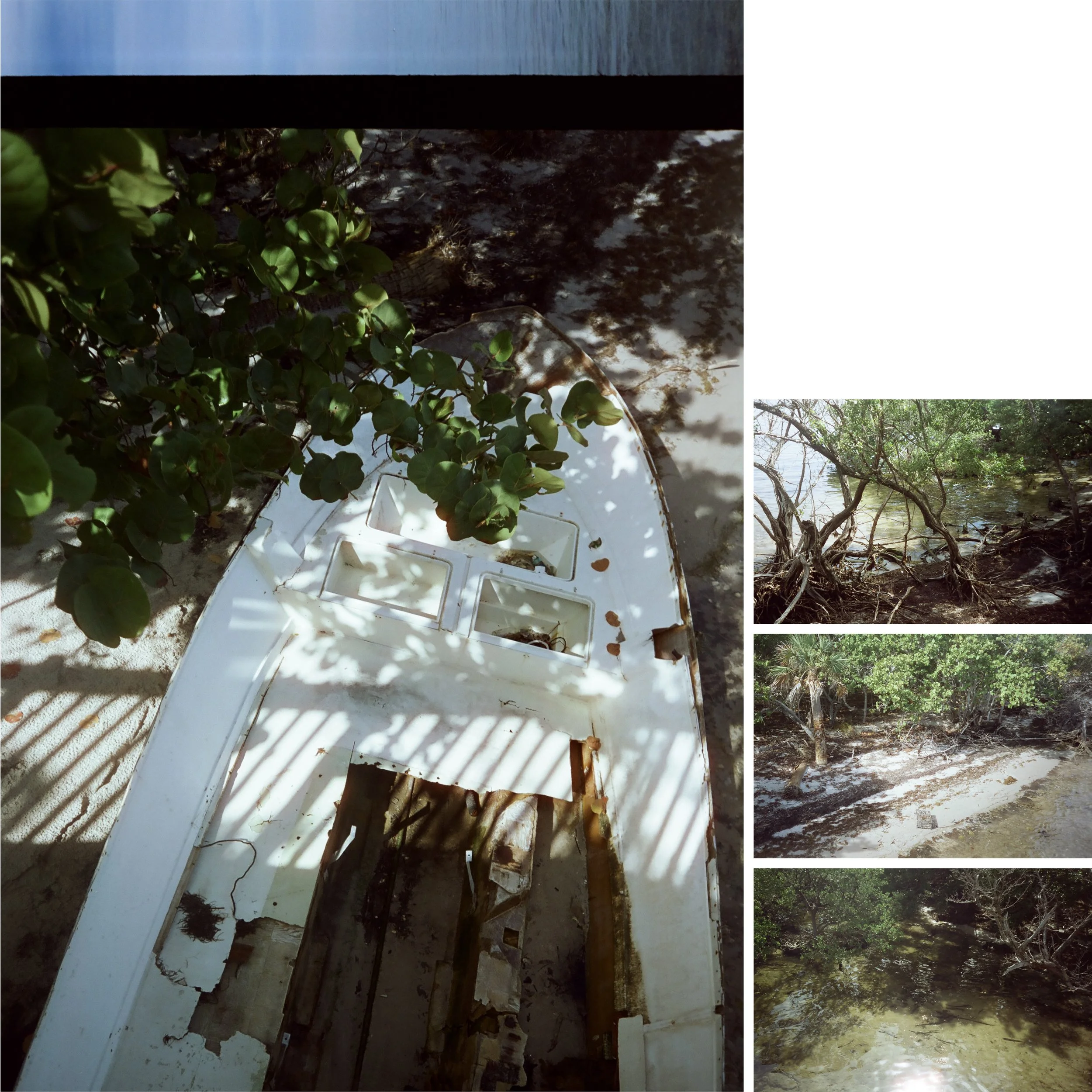
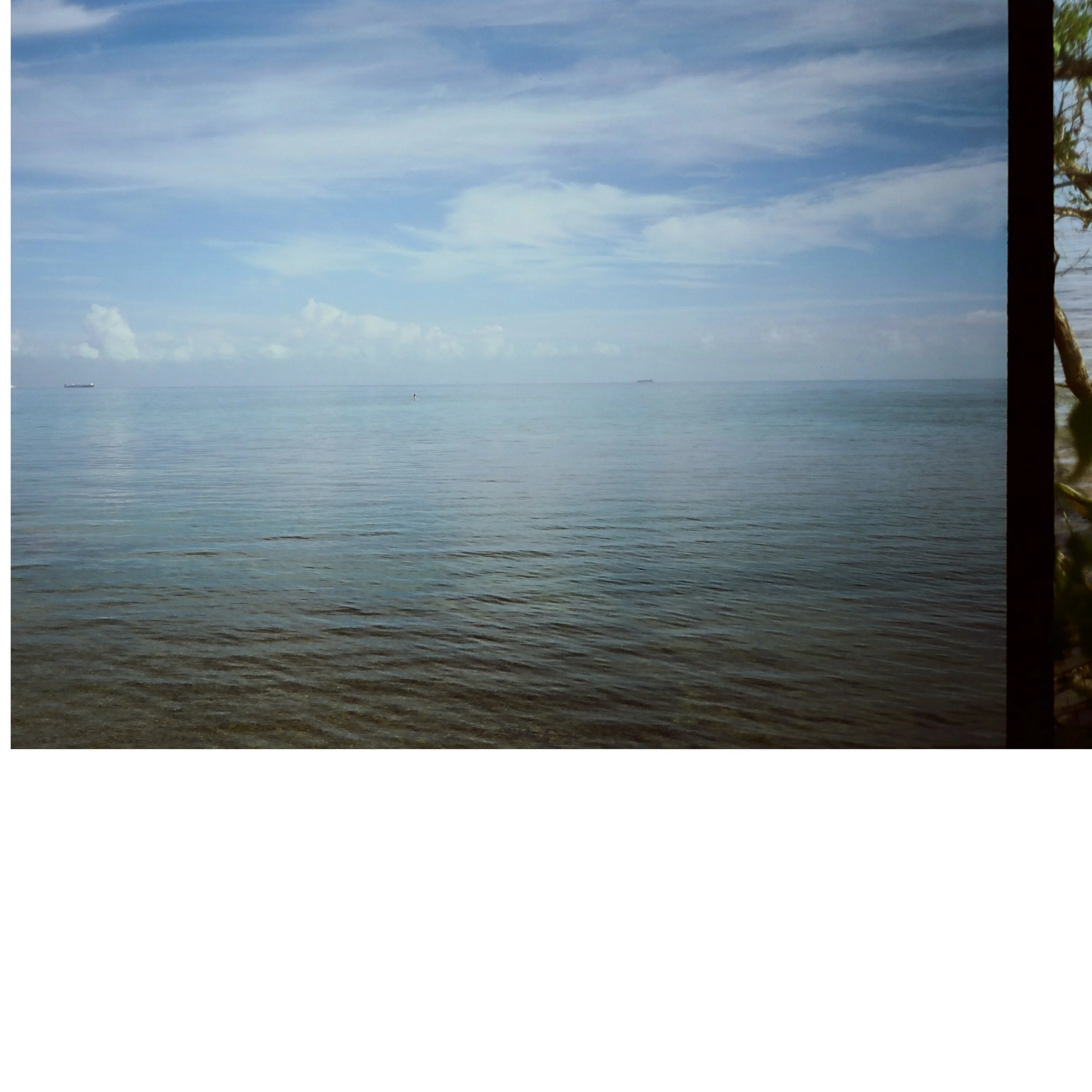
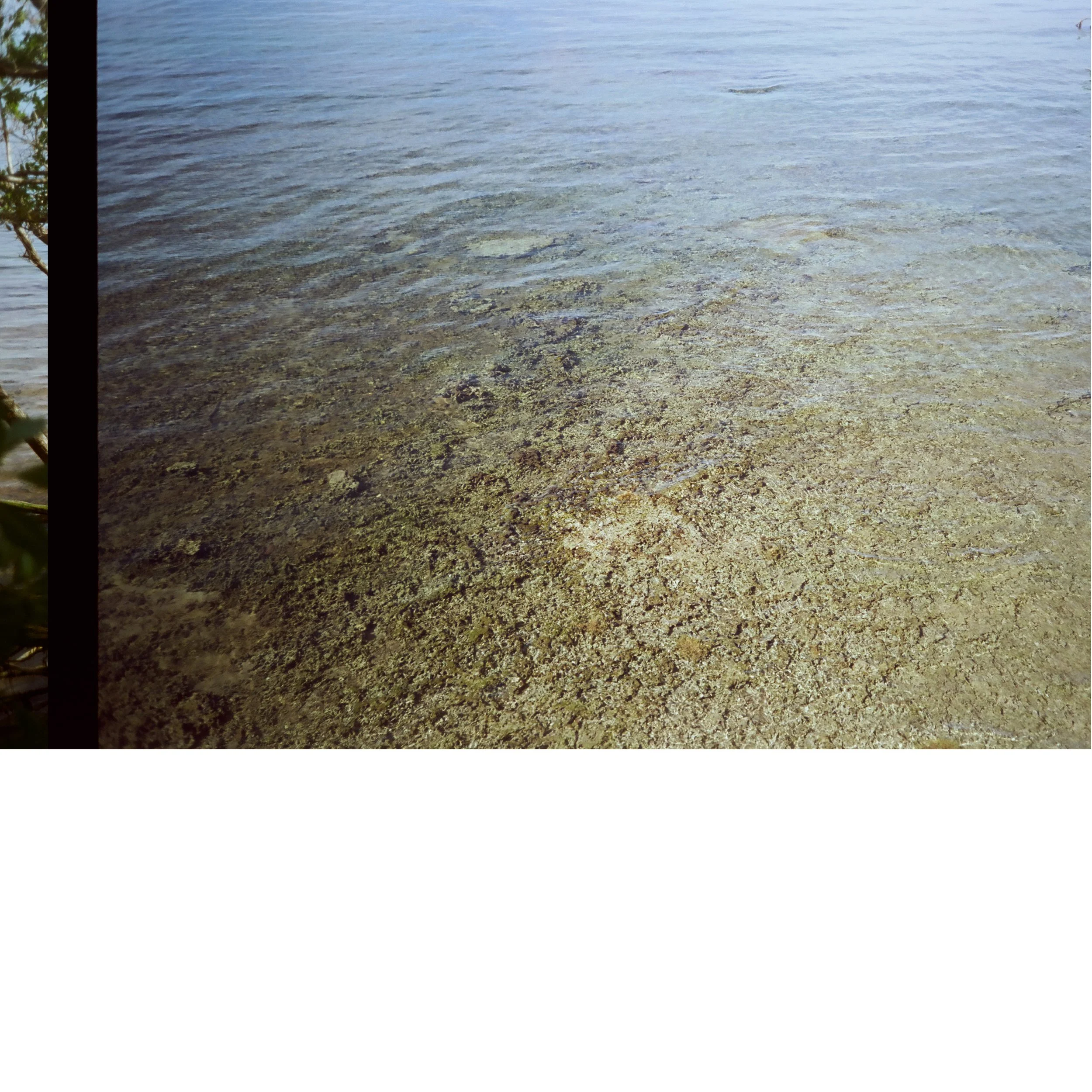
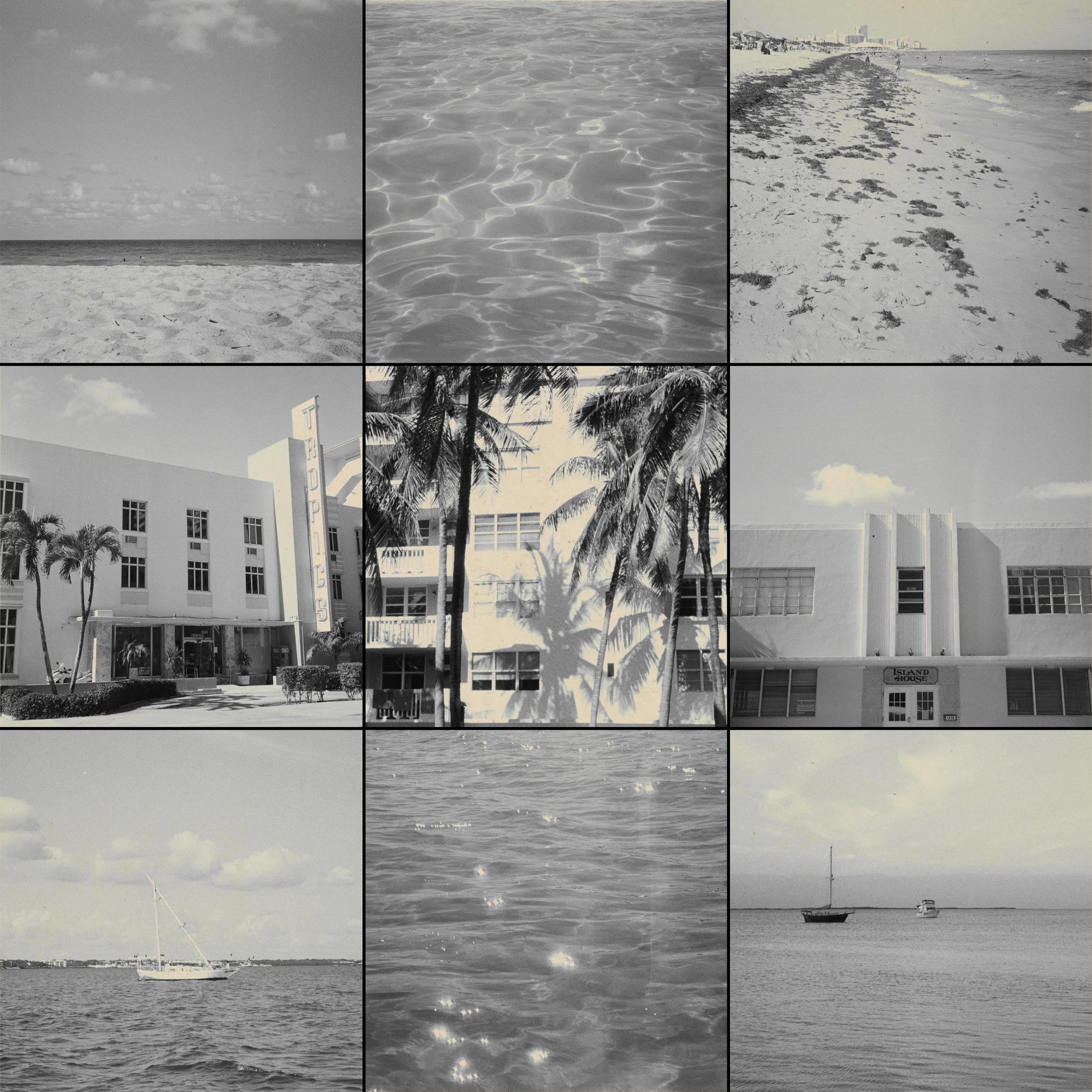
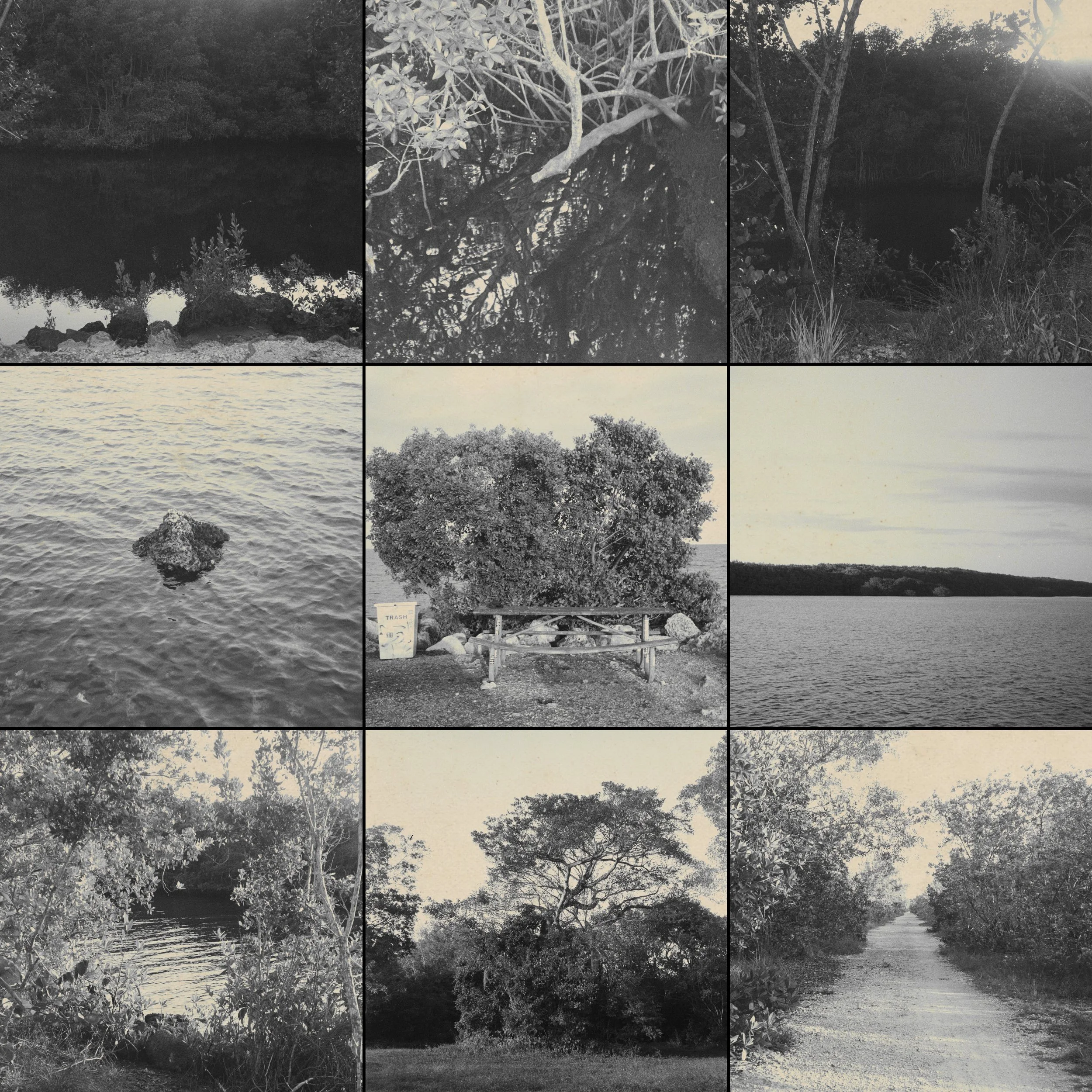
This endeavor takes fragments from these places, ones central to my upbringing, and recomposes them in the interest of validating nature’s intrinsic value rather than what I gained or learned from it. I believe the above composition on the right captures a Miami removed from the glitz and glamour (left) of downtown and Miami Beach, encapsulating where I feel most attuned to what Miami truly is—much like the Cuban photographers who used landscape as a vehicle to consider cubanidad.
These personal experiences bridged academic inquiry with creative practice. When experiencing these landscapes, I was transported to a world I had only heard about in my father’s stories of his early years in Miami after exiling from Cuba. I had always yearned for experiences of this Miami, and even as I now recognize the romanticism in his narratives through the lens of environmental imagination, I still believe this mode of interaction with the non-human world is integral to overcoming the ramifications of environmental degradation and, perhaps, the more pervasive issue—our dissociation from nature itself. Ultimately, this process of rediscovery, underscores the significance of this work. If nothing else, it has opened my mind to new ways of interacting with the non-human, understanding it, and uncovering something new in it.